Thinking about seeing a therapist, dietitian or feeding specialist about picky eating can feel like a big step, especially if you've always managed it alone. Most people go in unsure what will even happen in the room, which makes the idea easier to put off. Here is a realistic look at what the actual appointments tend to look like.
🗣️ What the first appointment usually covers
A first visit is mostly questions, not pressure to try new foods on the spot. Expect to be asked about your current safe foods, how long you've eaten this way, whether it's always been like this or changed after an event, and whether any foods cause physical symptoms versus just being disliked. A dietitian will often also ask about energy levels, weight history and any nutrients you might be missing, while a feeding therapist may focus more on sensory triggers like texture, smell or appearance.
✅ Who tends to help with what
- A registered dietitian looks at whether your current diet covers enough nutrients and energy, and can suggest substitutes within foods you already tolerate rather than foods you're supposed to force yourself to eat.
- A feeding therapist or occupational therapist works on the sensory side: gradual exposure to textures or smells at your own pace, often starting with just having a food nearby, not eating it.
- A therapist or counselor is useful if eating is tied to anxiety, past experiences, or if mealtimes cause stress with family or partners, separate from the food itself.
You don't need a diagnosis to ask for help. "Picky eating" that affects your nutrition, weight or daily life is a valid reason to book an appointment, whether or not it meets the criteria for a specific feeding disorder.
🩺 What usually does not happen
- You won't be forced to eat something on the spot. Most approaches use small, gradual steps you agree to, not surprise exposure.
- It's rarely a one-visit fix. Expect a handful of sessions over weeks or months, with small goals between visits rather than one dramatic appointment.
- Nobody will make you eat "normally" by a deadline. The goal is usually more variety and better nutrition at a pace that doesn't feel overwhelming, not becoming an adventurous eater.
📋 How to prepare for the first visit
Write down your current safe foods
A short list of what you reliably eat gives the specialist a starting point, and saves you from trying to remember everything under pressure in the room.
Note any physical reactions separately from dislikes
If certain foods cause stomach pain, hives or other symptoms, mention that specifically - it changes whether the visit is about preference, sensory issues, or something to rule out medically.
Bring up any nutrient worries
If you suspect you're low on something specific, like iron or fiber, say so. It helps the dietitian prioritize what to check first instead of guessing.
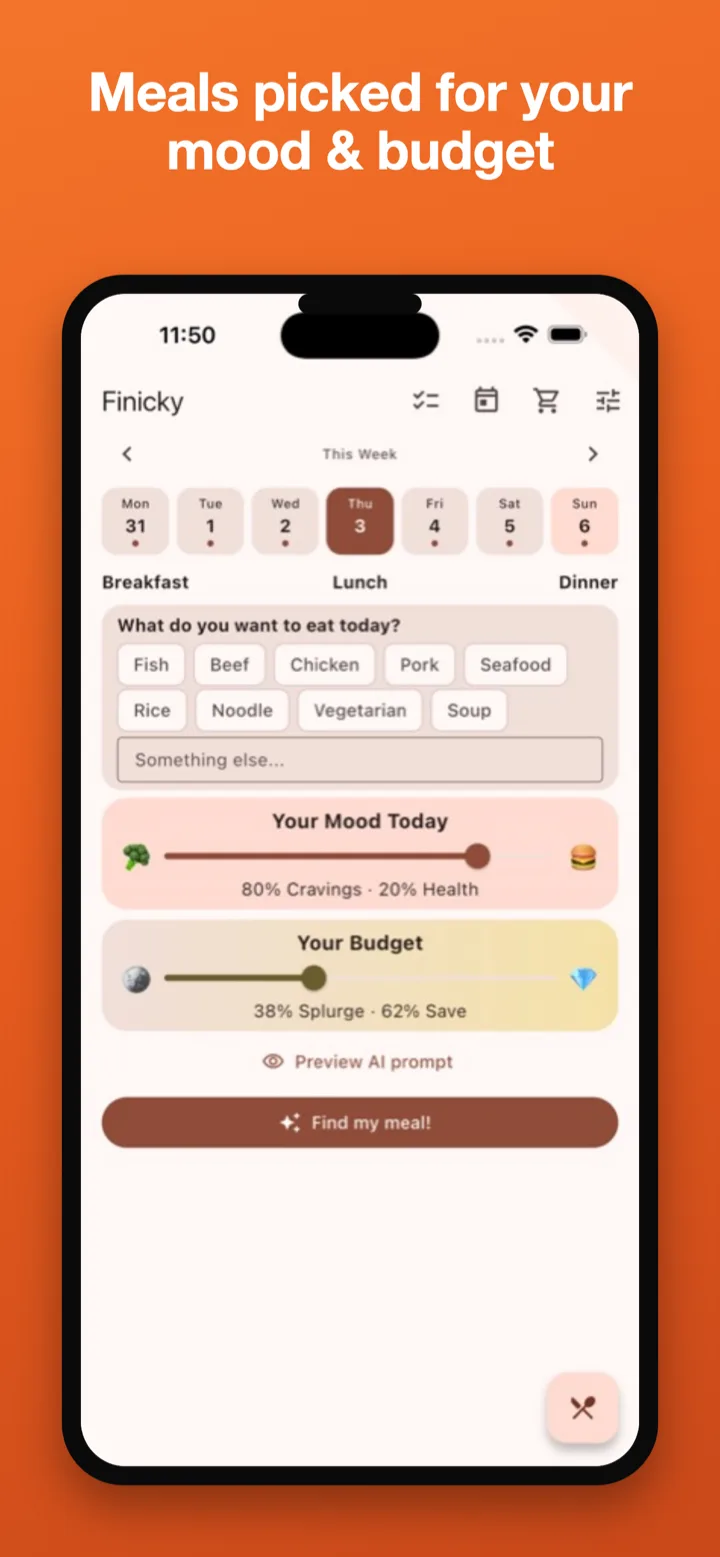
Bring your actual eating pattern, not the version you think sounds better. Finicky's history of logged meals can double as a quick, honest reference for what you really eat in a typical week, which is often more useful to a specialist than trying to recall it from memory.