You avoid a food and someone asks: "are you picky, or does it actually make you sick?" It's a fair question, and the two can look similar from the outside. Preference and intolerance call for different responses, so it helps to know which one you're dealing with.
🔍 Signs it's more likely preference
- It's about taste, smell or texture, not a physical reaction. You dislike the food, but nothing happens in your body after eating a small amount.
- The reaction is consistent and sensory: it's always "too slimy" or "too bitter," not sometimes fine and sometimes not.
- You can eat a bite without consequences, you just don't want to finish the plate.
⚠️ Signs worth checking with a doctor
- Physical symptoms after eating: bloating, stomach pain, diarrhea, headaches, hives, swelling or trouble breathing.
- The reaction happens with the same food most times you eat it, even in small amounts or hidden in a dish.
- Symptoms show up a while after eating, not just in the moment, which can point to an intolerance rather than taste.
- You've started cutting out more and more foods to avoid a reaction, which can lead to missing nutrients.
Allergy and intolerance aren't the same thing. A true food allergy involves the immune system and can be sudden and serious, like hives or swelling. An intolerance, such as to lactose, usually causes digestive discomfort and builds up with the amount eaten. Both are different from simply disliking a taste or texture.
🩺 What a doctor visit usually looks like
A doctor or allergist will typically ask about your symptoms, timing and family history, and may suggest an elimination diet, a food diary, or allergy testing depending on what they suspect. Don't try to self-diagnose a serious allergy by repeatedly testing a food that caused a strong reaction.
✅ If it turns out to be preference, not intolerance
- Keep a short note of what actually happens when you eat the food, not just how you feel about eating it. That record is useful if a doctor ever asks.
- Don't label a food "allergic" if it's really disliked: it can make others dismiss a real allergy later, and makes it harder to track your own patterns.
- Build meals around what you do enjoy instead of spending energy trying to force down a disliked food that isn't actually harming you.
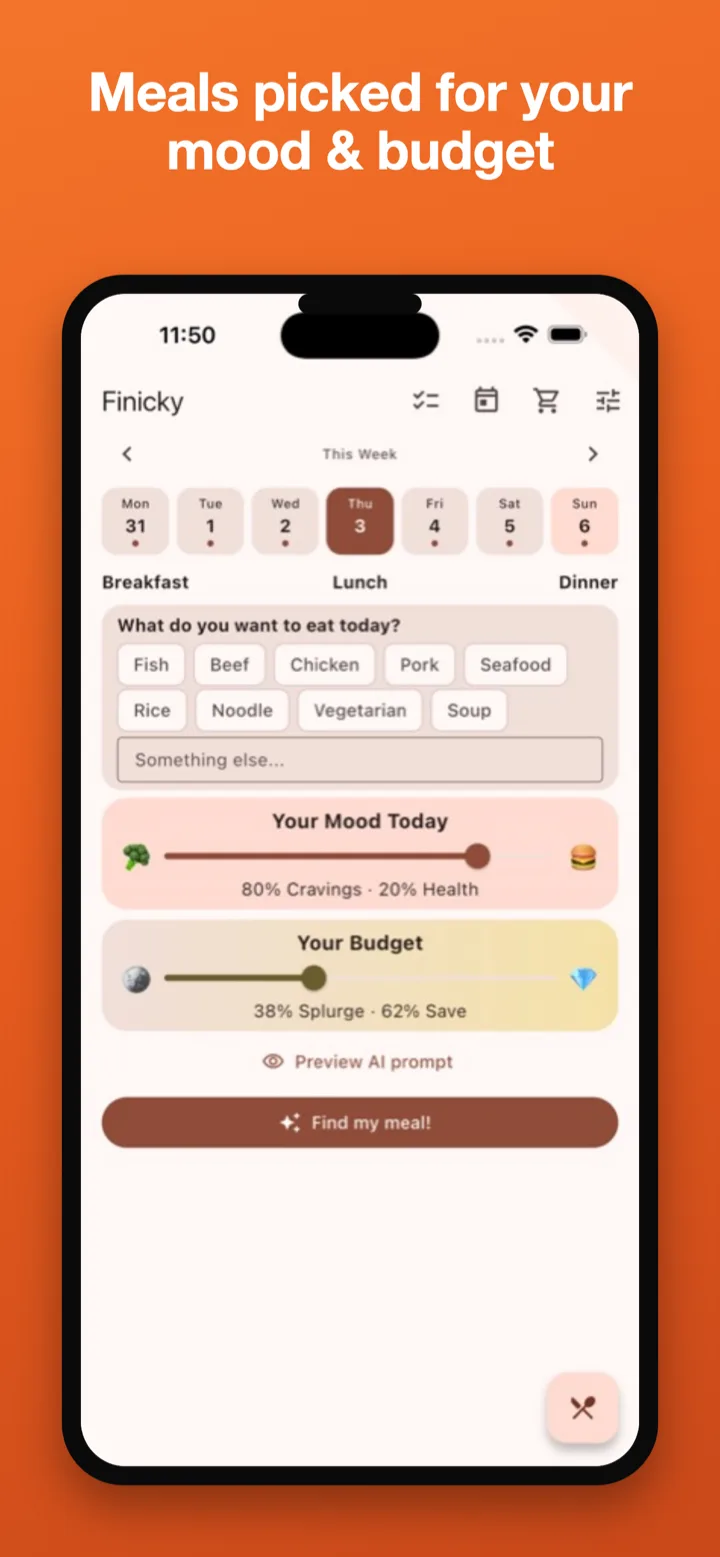
Finicky tracks your blacklist either way. Whether a food is off your list because you dislike it or because it doesn't sit well with you, set it once and meal plans are built around the rest.
🩺 When it's more than either one
If avoiding foods is affecting your weight, nutrition or daily life regardless of the cause, talk to a doctor or dietitian. They can help sort out what's sensory, what's physical, and what's worth addressing either way.