Plenty of adults still avoid whole food groups, order the same dish every time, or quietly push things to the side of the plate. If that's you, you're not being difficult. Research points to several reasons picky eating lasts into adulthood, and most of them have nothing to do with willpower.
🔍 Five common reasons
👅 Stronger taste sensitivity
Some people taste bitterness much more strongly than others, partly because of their genes. To them, broccoli, coffee or dark leafy greens can taste harsh rather than pleasant.
🥄 Texture sensitivity
Slimy, mushy, stringy or mixed textures can feel genuinely unpleasant, sometimes enough to trigger a gag reflex.
👃 A sensitive nose
Much of what we call taste is really smell. Strong smells, like fish, eggs or some cheeses, can put you off before the first bite.
😟 Fear of new foods
Being wary of unfamiliar food (food neophobia) is normal in toddlers. For some people it simply never fully fades.
🧒 Early experiences
Being pressured to “finish your plate”, or a bad experience like food poisoning, can leave a lasting dislike of certain foods.
It's usually a mix. Most picky eaters have more than one of these going on. Noticing which ones fit you tells you what is worth trying, and what isn't.
✅ What actually helps
- Cook around bitterness: roasting, a little salt, cheese or a sweet glaze tones down bitter vegetables.
- Change the texture: blend, roast or chop finely instead of forcing a texture you hate.
- Take small steps: try foods that are close to ones you already like, one change at a time.
- Remove the pressure: a single bite counts. No one needs to clear their plate.
- Plan around your list: build meals from foods you enjoy instead of fighting the same battle at every meal.
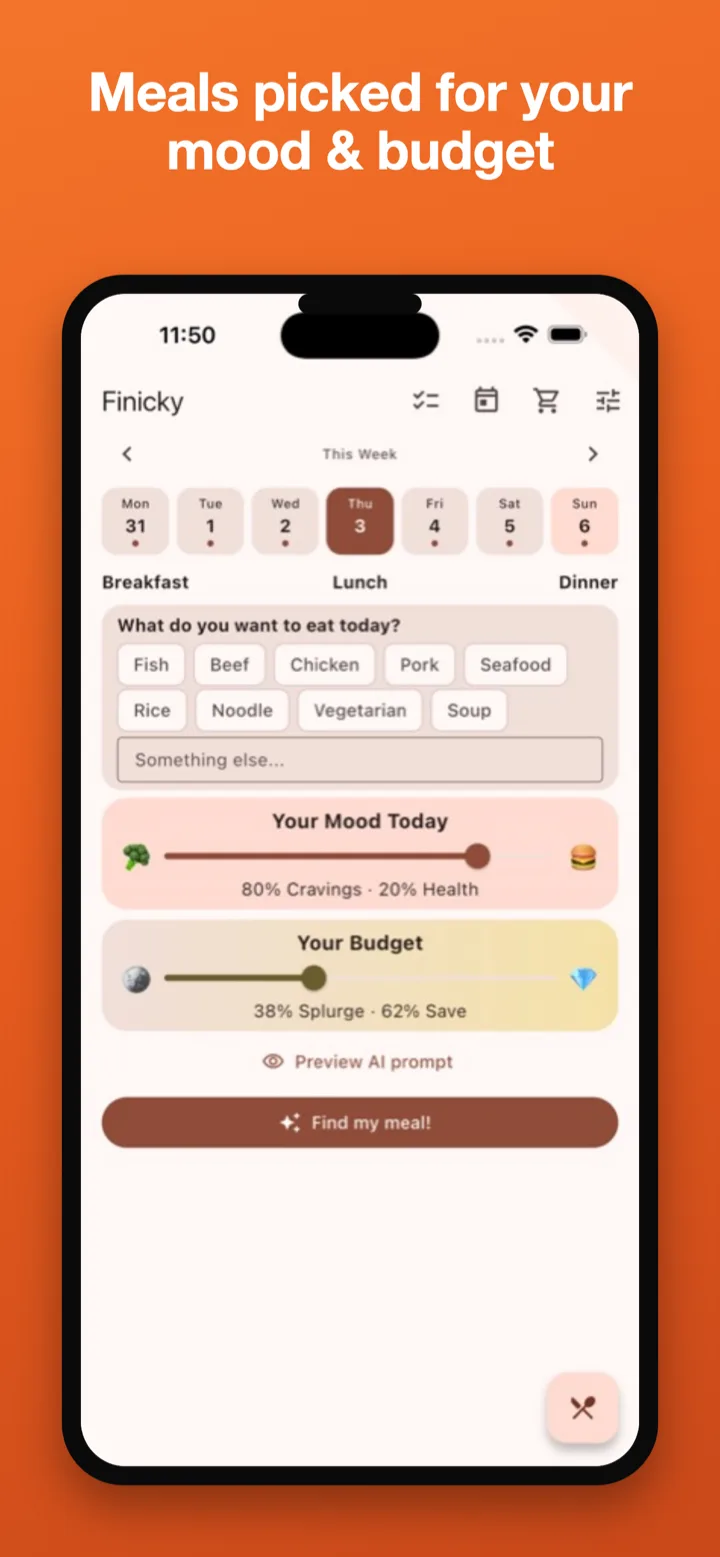
Finicky is built for exactly this. Tell it the ingredients and textures you can't stand, and it plans meals around them. Rate meals 👍 or 👎 and it leans toward dishes like the ones you loved.
🩺 When it's more than picky
If your list of accepted foods is very short, or eating causes strong anxiety, weight loss or problems at work or with friends, talk to a doctor or dietitian. Severe food avoidance can be a condition called ARFID, and it can be treated.