Pregnancy can flip your eating habits upside down overnight. Foods you used to enjoy suddenly feel off, smells that never bothered you turn your stomach, and on top of it all your body now needs more of certain nutrients. For someone who was already a picky eater, that's a lot of change at once.
🤰 Why pregnancy makes picky eating harder
Nausea and heightened smell sensitivity, common in early pregnancy, often knock out foods that used to be safe, while cravings or aversions can shift week to week. At the same time, needs for things like iron, calcium and protein go up. The pressure to "eat for two" can turn every meal into a source of guilt instead of nourishment.
✅ Five ways to eat well without fighting your body
Let safe foods carry you through rough weeks
If plain crackers, toast or rice are all you can handle some days, that's fine. A narrow diet for a stretch of weeks is normal; it doesn't undo the good days.
Eat small amounts often instead of three big meals
An empty stomach can make nausea worse. Small snacks every few hours are often easier to keep down than a full plate.
Try cold or room-temperature food when smells are the problem
Hot food releases more aroma. Cold sandwiches, smoothies or chilled fruit can be easier to tolerate when cooking smells are off-putting.
Cover nutrient gaps with foods you already eat
If dairy is out, look at fortified alternatives; if meat is hard to manage, lean on eggs, beans or a prenatal vitamin your provider recommends. You don't need to force down foods you can't tolerate to get the nutrients.
Talk to your provider before worrying about a narrow diet
A midwife or doctor can tell you whether a limited diet is a short-term adjustment or something to address with supplements, which is far more useful than guessing on your own.
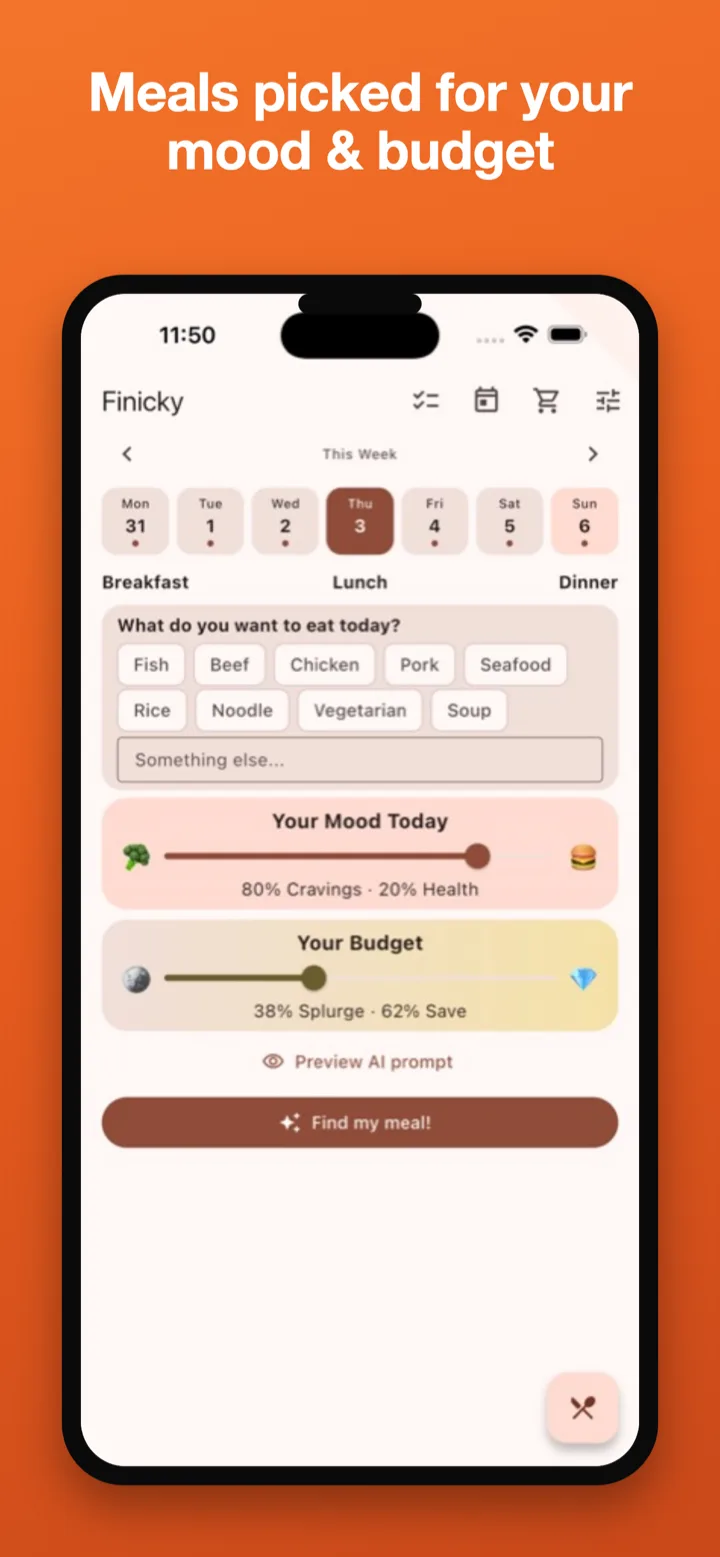
Let your plan flex week by week. Finicky remembers the ingredients and textures you're avoiding right now, so you can keep planning meals around what actually works for you this week, without starting from scratch every time your tolerance changes.