When your work hours shift every week, or you're on call, on nights, or never quite sure when you'll be free to eat, a weekly meal plan with fixed dinner times doesn't hold up. The problem isn't that you're picky about more foods than usual, it's that the usual way of planning assumes a schedule you don't have.
🕑 Plan around "meal slots," not clock times
Instead of planning "dinner at 7pm," plan a fixed number of meals and snacks per shift, and let the clock time move. A night-shift worker might need a meal before the shift, one mid-shift, and one after getting home, regardless of whether that lands at 11pm or 6am.
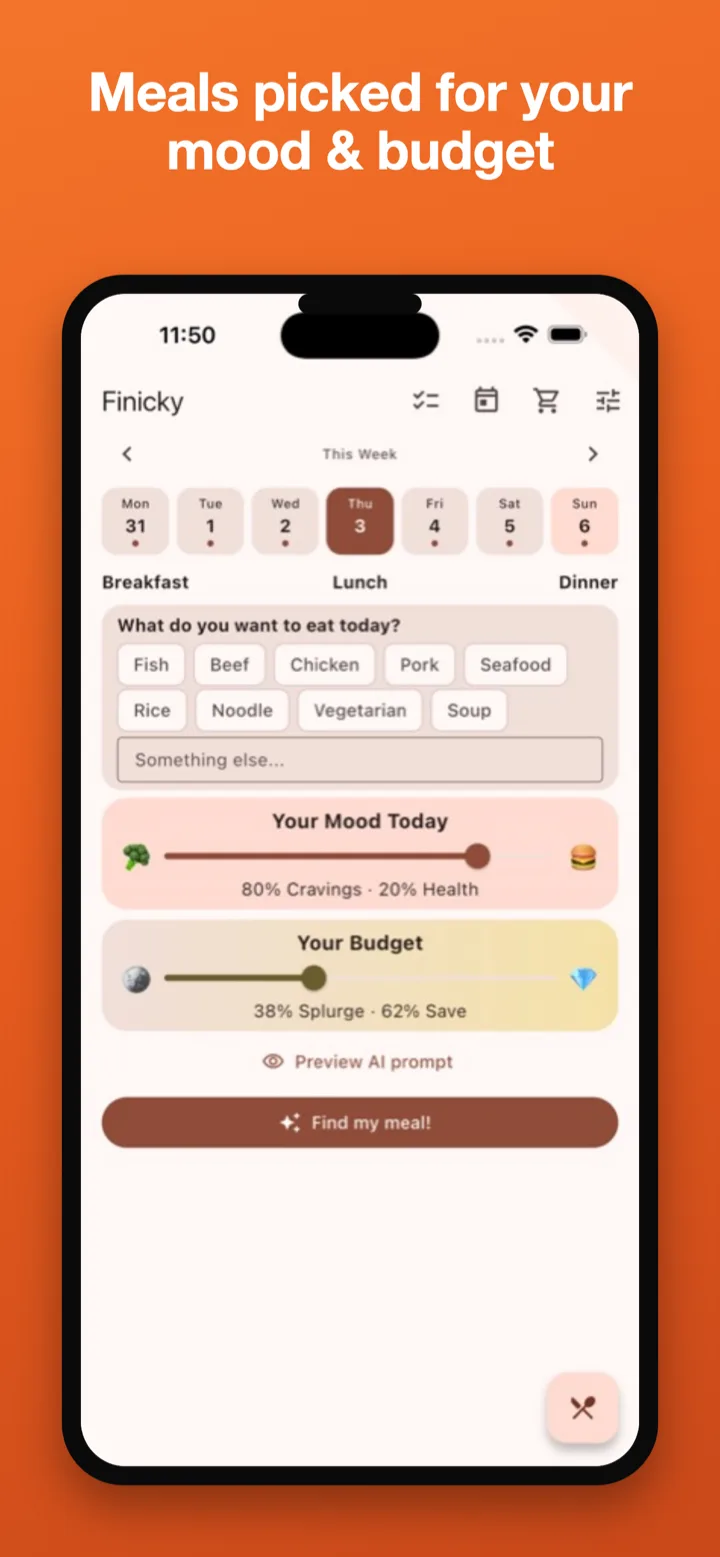
Finicky plans by day, not by time slot, so you can set up a day's worth of meals that fit your eating pattern and reorder or swap any of them with one tap when your shift changes.
🍱 Batch-cook on your off days
Pick one low-energy-cooking day
Cook two or three meals in bulk on a day off, so shift days never require standing at the stove when you're exhausted.
Favor reheat-and-go over assembly
A portioned container you can microwave beats a meal with five components to put together after a long shift.
Keep one "too tired to cook" backup
A frozen meal, a can of something you actually like, or a simple egg dish you can make half-asleep, kept stocked for the nights nothing else happens.
🎒 Make food portable
- Pack meals in containers you can eat straight from, for breaks that might be short or get cut.
- Keep a small stash of safe snacks at your workplace or in your bag, not just at home.
- Prep the "before shift" and "after shift" meals the night before, so they're grab-and-go when you're already tired.
😴 Protect sleep from food timing
Eating a heavy meal right before sleeping after a night shift can make it harder to fall asleep. Favor a lighter, familiar meal post-shift, and save a bigger meal for after you wake up, when there's time to eat and sit for a while.