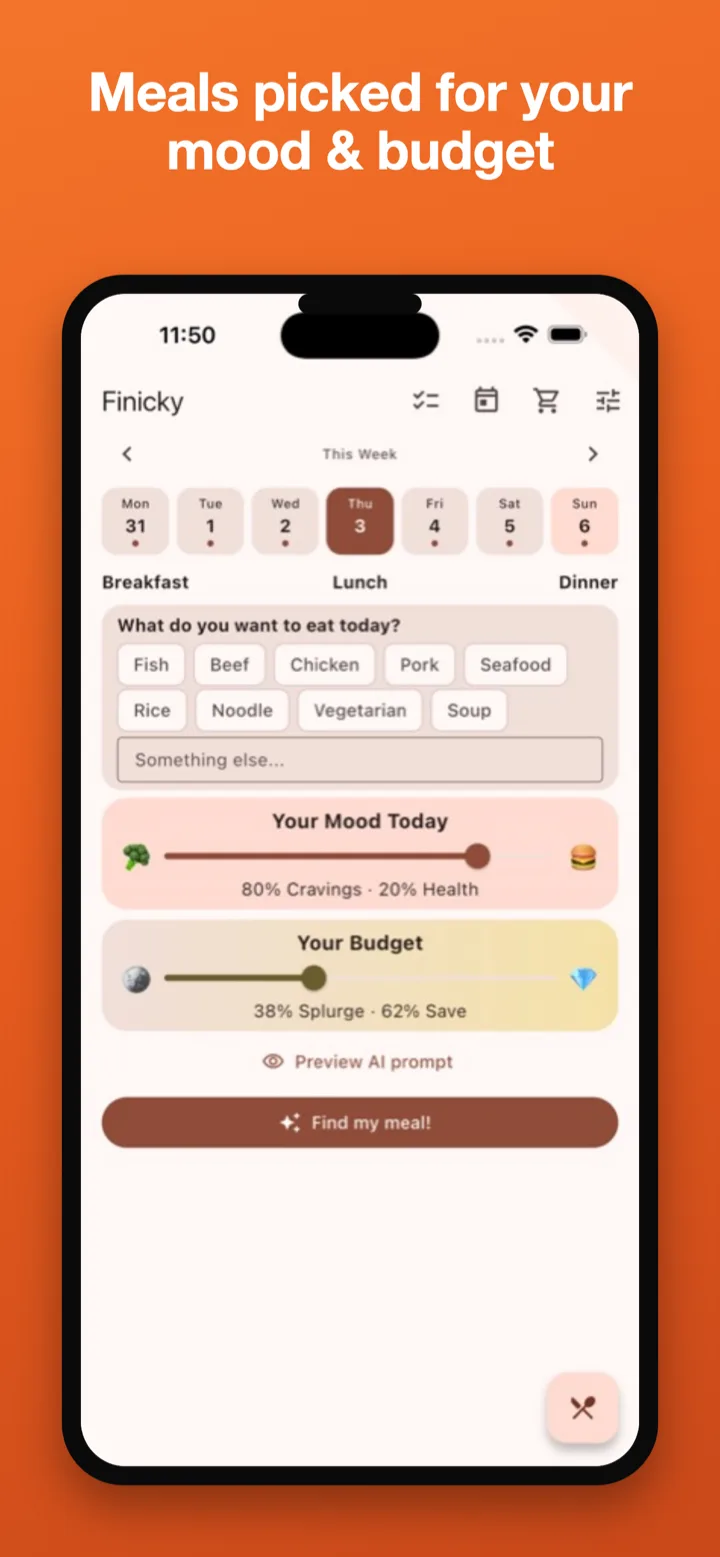
Managing blood sugar usually means paying attention to carbs, timing and consistency, but most of that advice assumes you'll eat a wide variety of foods. If your safe list is short, "just swap in more vegetables" or "try a new whole grain" isn't a small suggestion, it's a much bigger ask. The two goals don't have to fight each other.
🩸 Why variety-first advice doesn't fit
General diabetes guidance often leans on rotating in new foods for fiber and nutrient variety. For a picky eater, that's backwards: the safe foods you already eat are the ones you'll actually eat consistently, which matters more for steady blood sugar than a "better" meal you skip because it felt like too much. Consistency beats variety here.
🍽️ Working within your existing safe foods
- Look at portion and pairing before swapping foods. The same safe carb eaten with a protein or fat alongside it behaves differently for blood sugar than eaten alone, often without changing what's on the plate at all.
- Keep meal timing as steady as your food choices. Eating your safe meals on a consistent schedule supports steady blood sugar even if the food list itself stays narrow.
- Check your plan's calorie and macro numbers against what you're actually eating. A meal plan can show the carbs in a safe meal clearly enough to plan around, without requiring the meal itself to change.
- Flag recipes with similar macros when you do want to expand. Widening from a safe food to a close variant with a similar carb and protein profile is an easier swap than jumping to something nutritionally different.
A consistent safe meal you actually eat beats a "balanced" one you skip. Blood sugar management rewards predictability as much as variety.
🩺 When to loop in support
A doctor or dietitian familiar with both diabetes management and restrictive eating can help build a plan around your actual safe foods rather than a generic list, and can adjust medication or insulin timing to match the way you really eat rather than the way guidelines assume you eat.