A dining hall with fifty options can still feel like nothing you can eat, if most of what's out is mixed into sauces, casseroles or buffet trays you can't customize. The real issue isn't a lack of food, it's a lack of control over how it's prepared - and that's something you can work around with a bit of scouting and a backup plan.
🔍 Scout the dining hall before you commit
Most dining halls post a weekly or daily menu online before you ever walk in. Check it ahead of a meal so you're not deciding what to eat while standing in line, hungry and surrounded by smells. Note which stations are reliably safe (the grill, a salad or cereal bar, a deli counter) so you always have a fallback even on a bad menu day.
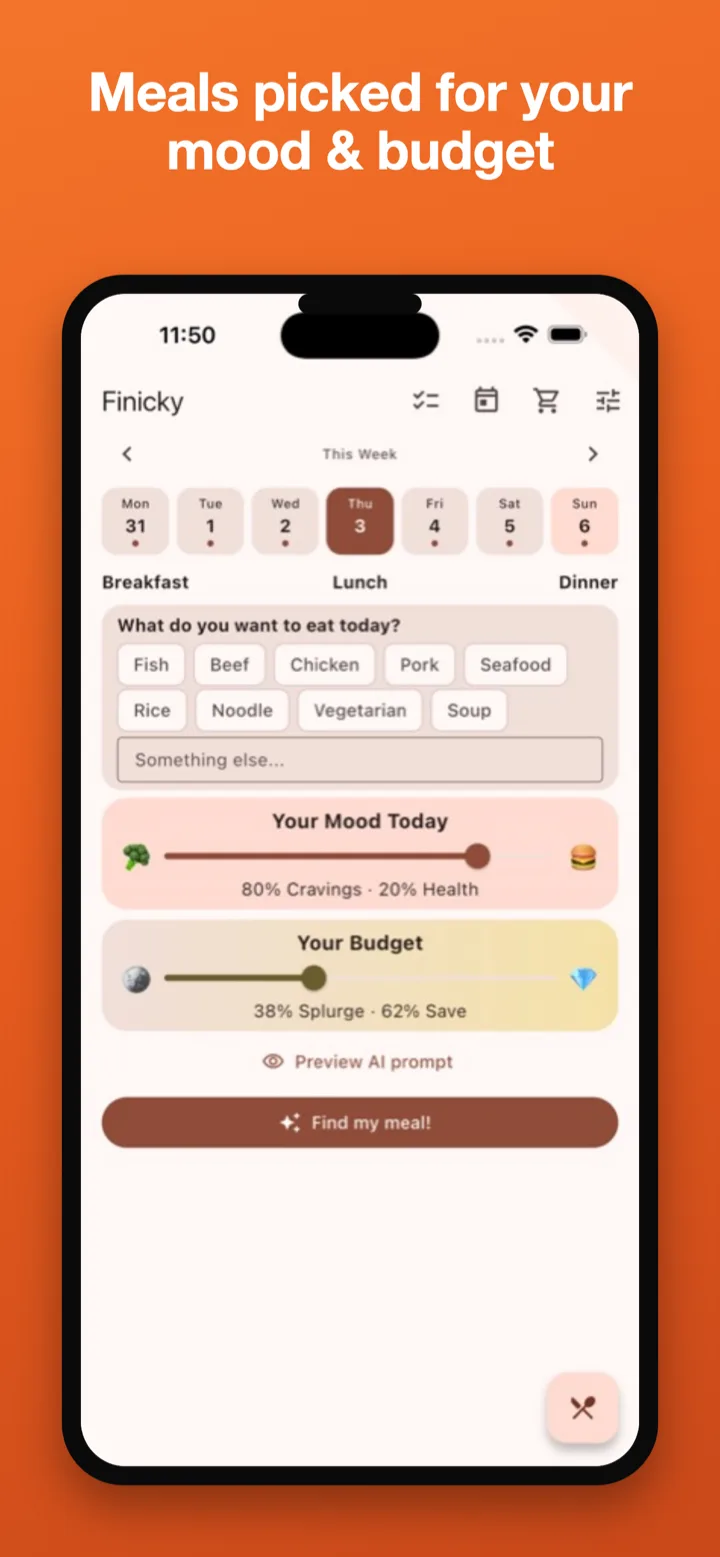
Log what you actually eat in Finicky after a few dining hall visits, and it learns which stations and dishes work for you, so your planned meals at home line up with what you're realistically able to get on campus too.
🎫 Use meal swipes on the stations that work for you
Find your 2-3 reliable stations
Instead of treating every meal as a fresh gamble, settle on a short list of stations or dishes that are consistently fine, and default to them on busy or stressful days.
Ask for items separately
Most dining hall staff will serve components separately if you ask (sauce on the side, plain instead of mixed in), even if it's not how the dish is normally plated.
Save some swipes for grab-and-go
If your plan includes a to-go cup or sandwich station, saving a few swipes for that gives you a safe option on nights the main line has nothing you'll eat.
🧺 Stock a dorm-safe backup
- Keep a small stash in your room: cereal, shelf-stable milk, crackers, fruit, something that needs no cooking for the nights the dining hall genuinely has nothing for you.
- If you have a mini-fridge, a few grab-and-eat items (yogurt, cut vegetables, cheese sticks) cover gaps between meals without relying on vending machines.
- Restock on a fixed day each week (after a grocery run or a dining hall visit) so the backup stash doesn't quietly run out right before a stressful week.
🍳 Sharing a kitchen without conflict
If you're cooking in a shared dorm or apartment kitchen, label your food clearly and keep your ingredients in one spot, so roommates know what's yours and you're not hunting for your own pan. If a roommate cooks strong-smelling or very different food, a simple heads-up about your own food aversions avoids awkwardness without asking anyone to change what they eat.