Traveling as a picky eater usually means finding a restaurant or a hotel menu that has something safe. Camping removes that option entirely - there's often no restaurant for miles, no fridge, and no stove beyond what you packed. The fix isn't forcing yourself to "rough it" with unfamiliar food, it's planning a cooler and a food bag around the safe foods you already eat at home.
🧊 Packing a cooler that lasts the whole trip
A cooler packed without a plan turns into warm, soggy food by day two. Pack dense, cold items (frozen water bottles or reusable ice packs) at the bottom and sides, and group food by when you'll eat it so the first day's meals are on top and the last day's are buried deepest, where it stays coldest longest.
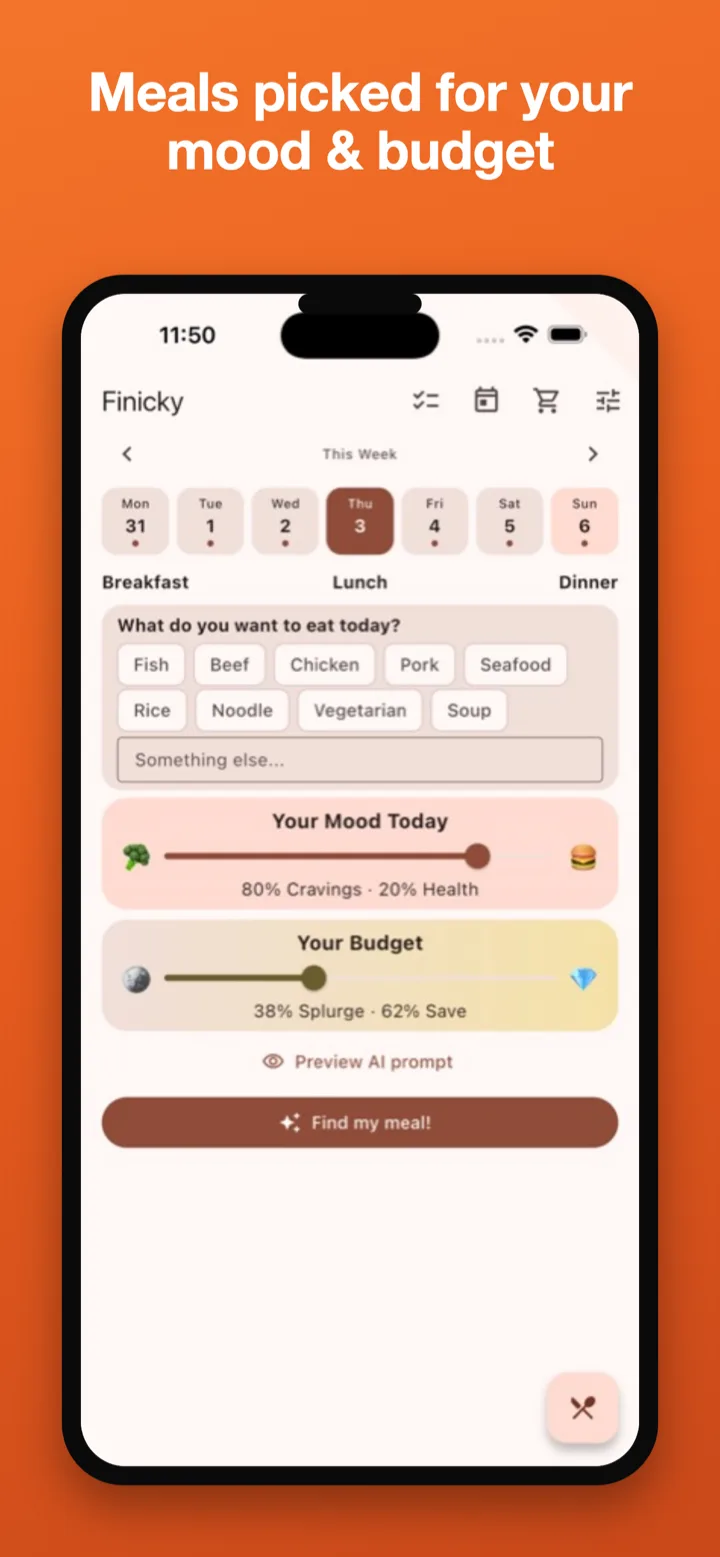
Finicky's shopping list can be built around what you're bringing, not cooking from scratch. Plan the trip's meals ahead of time around your safe foods and budget, then use the grouped shopping list so the cooler gets packed once, not restocked halfway through.
🔥 What actually works with minimal or no cooking
- Pre-cooked proteins that only need reheating (or none at all) travel better than raw ingredients that need a full setup to cook safely over a camp stove.
- Shelf-stable safe foods - the same crackers, pasta, or snack bars you'd eat at home - don't need refrigeration and are a backup if the cooler runs warm.
- One-pot meals that use a single pan and few ingredients are easier to get right on a camp stove than anything that needs multiple steps or precise timing.
🎒 Planning for the days you can't restock
Pack one extra day of food you know you'll eat
Weather, distance from a store, or a longer-than-planned trip can all push a camping trip past its food supply. An extra day of shelf-stable safe food costs little and removes the pressure to eat whatever's left.
Bring your own condiments and seasonings
A small bottle of the sauce or seasoning you actually use at home makes an unfamiliar camp meal taste close enough to normal, instead of leaving you eating something plain and new at the same time.
Check what's actually available nearby before you go
If the trip is near a small town or gas station, knowing what's there in advance means you're not discovering too late that the only backup option is food you can't eat.
🌲 It's fine to camp differently than everyone else
Other campers roasting whatever's on sale at the campsite store isn't a sign you're doing it wrong by sticking to food you packed yourself. Eating the same safe meals you'd eat at home, just outdoors, is still a full and working plan - the goal of the trip is the outdoors, not proving you can eat anything over a fire.